Key Takeaways
- Market Standard: Verified compliance under international API, ASTM, and ISO testing protocols.
- Procedural Integrity: Executed strictly via documented ICPO, verified POP, and fresh SGS laboratory testing.
- Risk Mitigation: Secure payment mechanisms (MT103 wire or bank-guaranteed DLC/SBLC) tied to dip-test validation.
In multi-million dollar bulk petroleum transactions, due diligence is not a mere formality—it is the cornerstone of risk management. Working in high-stakes energy commodity markets requires systematic verification of counterparty credentials, banking instruments, and the physical existence and purity of petroleum stored in port terminals.
The Role of Independent Inspection Agencies (SGS, Saybolt, Intertek)
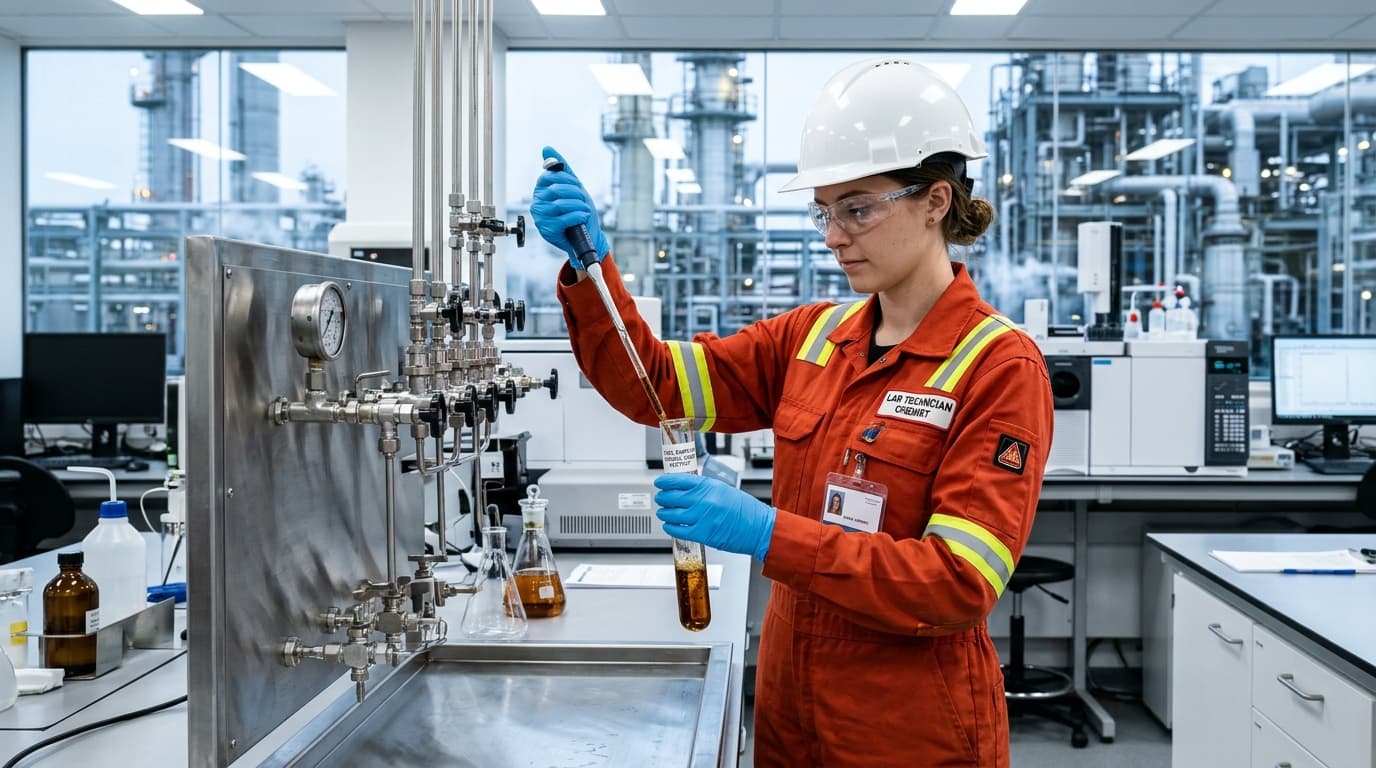
Neither buyer nor seller relies solely on the other's claims regarding product quality or quantity. Independent accredited surveyors act as neutral third parties:
- Dip Testing: Verifying liquid depth, temperature, and physical volume in shore tanks or tanker holds.
- Laboratory Chemical Analysis: Testing sulfur content, flash point, density, viscosity, water sediment, and distillation profile against international ASTM and ISO standards.
- Sealing and Security: Sealing manifolds and sampling valves to prevent tampering during transfer.
Counterparty Due Diligence: KYC and Compliance Screening
Legitimate commodity transactions demand strict adherence to international legal frameworks, including anti-money laundering (AML), FCPA regulations, and international sanctions enforcement. What A Fuel performs rigorous counterparty checks examining corporate registration, signatory passports, and bank comfort documentation before introducing counterparties.
Need Verified Petroleum Allocations or Reliable Suppliers?
What A Fuel connects genuine buyers with vetted refineries and suppliers. Transparent FOB/CIF procedures, verified SGS dip testing, and compliant documentation.
Request Custom Quote →Red Flags in Petroleum Deals to Avoid
Industry experience shows several common red flags that signify unverified or fraudulent offerings:
- Requests for upfront advance fees prior to verified Proof of Product or contract signing.
- Unrealistic discounts significantly deviating from S&P Platts benchmark pricing.
- Inability to provide authentic TSR (Tank Storage Receipts) or verifiable ATV (Authorization to Verify).
- Reluctance to permit independent SGS sampling and dip testing.
Protecting your business in global energy commodities requires rigorous procedures, verified counterparties, and independent testing at every phase. What A Fuel operates with absolute transparency, strict compliance, and professional mandate execution. Get in touch with our team to conduct safe, reliable petroleum transactions.


